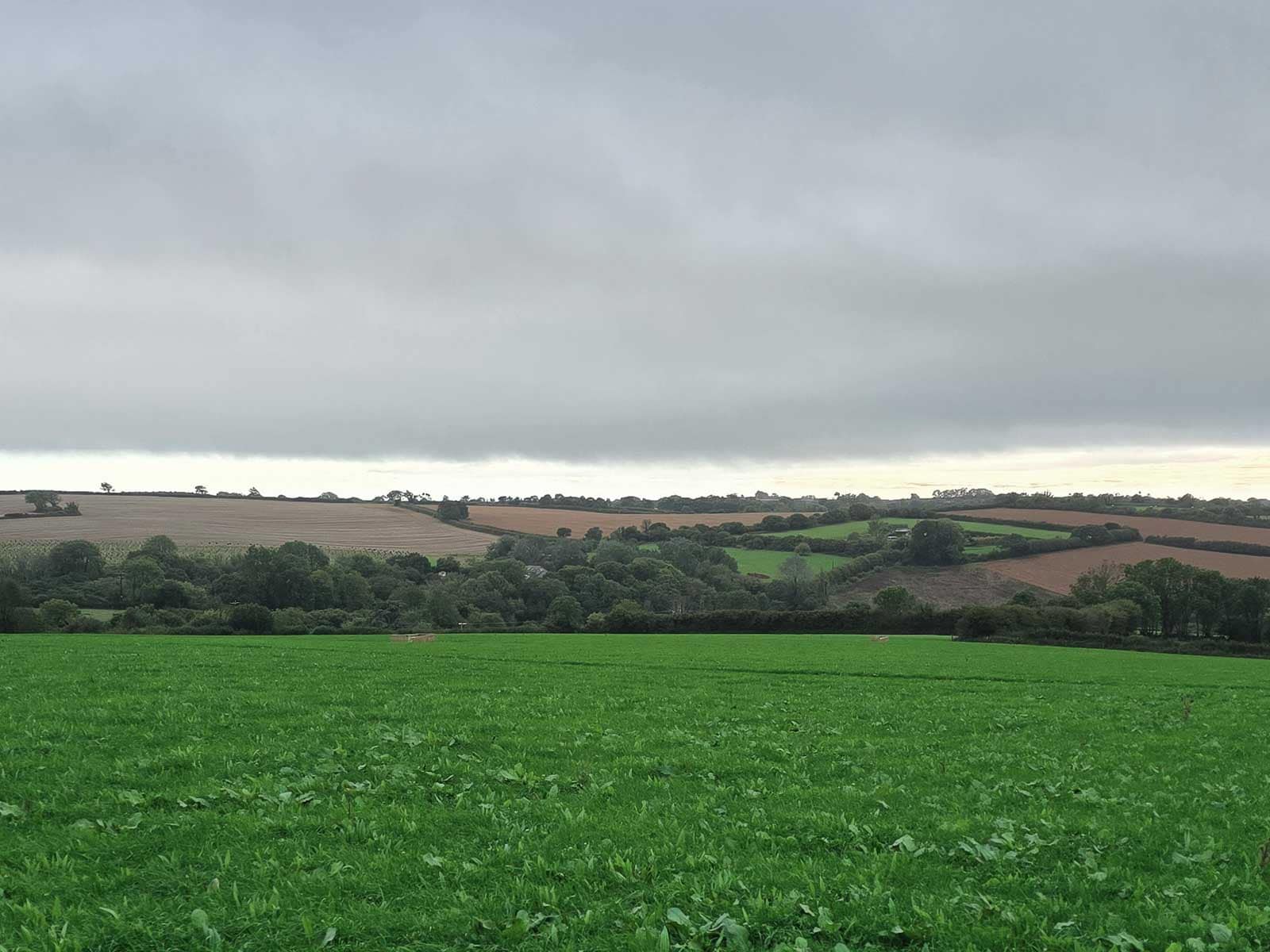
Harry Miller
Devon, England
This story was filmed in 2026 and reflects one farmer’s own experience with their Tow and Fert. Every farm is different, so please treat it as a story rather than a forecast for your place.
Rethinking nitrogen on old arable ground
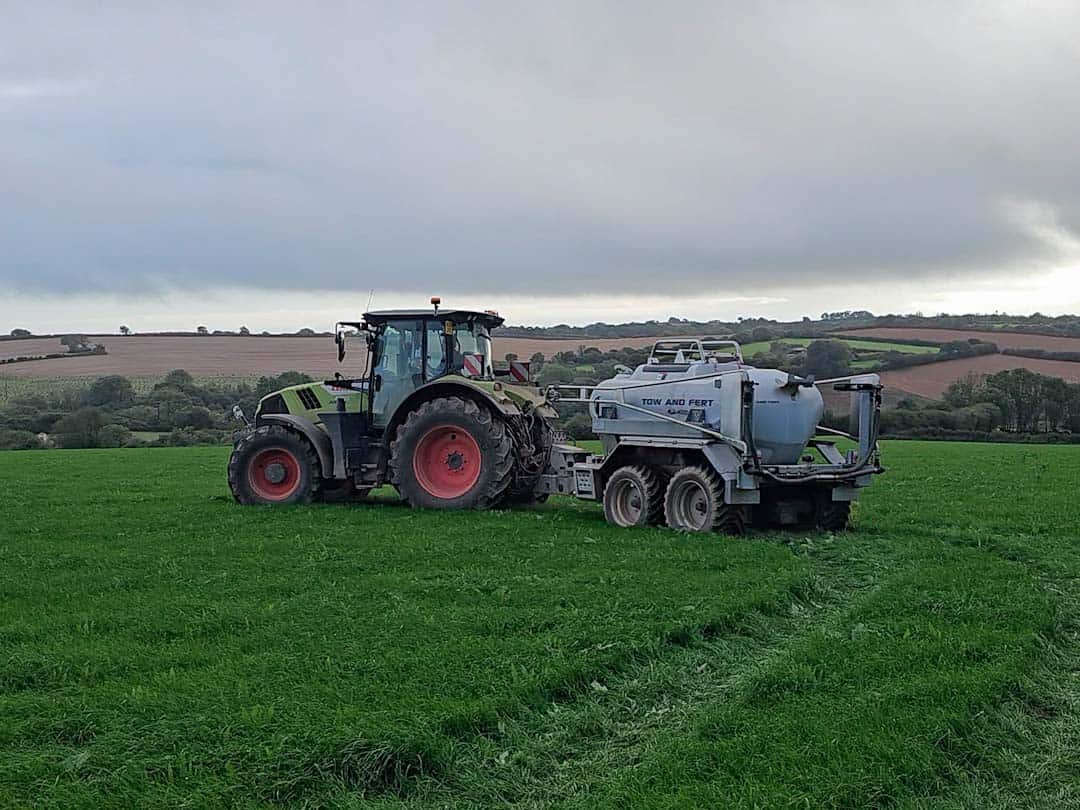
Harry Miller milks 550 spring-calving cows on a grass-based system on the South Devon coast. It’s a rented farm, and when he took it on 12 years ago it was all arable. This is his first season applying fertiliser with a Tow and Fert Multi 4000.
Fifty years of barley
Most of the farm had been in continuous spring barley for about 50 years, ploughed every winter. When Harry grassed it out, the soil was low in organic matter.
It’s done all right, but there’s definitely always been something missing in it. We’ve had to use quite high levels of nitrogen to get pretty moderate levels of growth, and I think lack of soil biology and soil organic matter is still holding us back.
The farm isn’t in a nitrate vulnerable zone, so nothing stopped them using high rates, and they did.
Why he went foliar
Over time, Harry started to question that way of farming.
I just became a bit disillusioned, really, with granular fertiliser. I think there’s so much more you can do with improving soil biology.
He first looked at foliar for nitrogen efficiency. The more he read, the more interested he became in what else could go through the machine to build soil biology.
A cautious first season
Going into his first season with the Tow and Fert, Harry didn’t want to cut too hard, too soon.
We would typically have been going on with sort of 50 kilos, as and when, because we were reliant on a contractor to do it. More recently, we’ve dropped down to 20 kilos a round of nitrogen with the Tow and Fert. We were nervous about dropping it too far in the first year.
He kept the mix simple, with a urea sulphur blend, humates and molasses. The Multi 4000 dissolves granular urea in cold water in the tank, so it goes on as a liquid with the other inputs in the same pass.
Thinking about Tow and Fert?
Talk with a specialist
Tell us about your operation and we’ll match the right model and setup for you.
Walking the farm every week
The biggest change has been the routine. Instead of one call to the contractor, Harry now decides paddock by paddock.
It’s not as easy as just applying granular, and one phone call and a contractor coming in every week, month or so to do the whole lot. You’ve got to walk the farm every week and write a list of what paddocks are at the right height for having a foliar feed.
He’s still working out the timing around grazing, and aims to spray each paddock four or five days before the cows go in.
Through the drought
This summer brought a severe drought. On granular urea, Harry would have waited for rain before spreading.
Because we were foliar, we weren’t waiting for rain going into the drought, so we were still able to apply N through May and June as growth dictated. We weren’t waiting for the showers of rain that never came, like we would have been with granular urea. So I think that definitely helped us push feed into June and July.
With the season nearly done, he’s already thinking about where his nitrogen goes from here.
When we were doing granular, total use would have been around the sort of 250, and this year with the drought, we’re probably going to end up around sort of 160, I would think. But I think there is definitely room to get it down nearer 100 in time.
What’s next
Next season Harry plans to start sap analysis and add trace elements. He’s also looking at compost teas and other sources of nitrogen. The Multi 4000 can take an optional compost basket for making compost extracts in the tank.
It’s one season, in a drought year, and it’s early days. But Harry knows what he’d tell another farmer:
If anyone asks, I would absolutely recommend it. It’s been a game changer for us.