
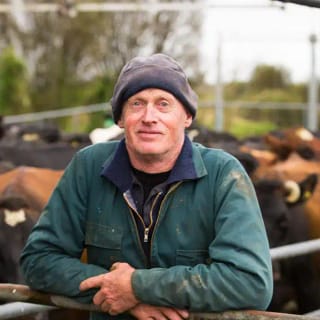
Ian Maxwell
West Coast, New Zealand
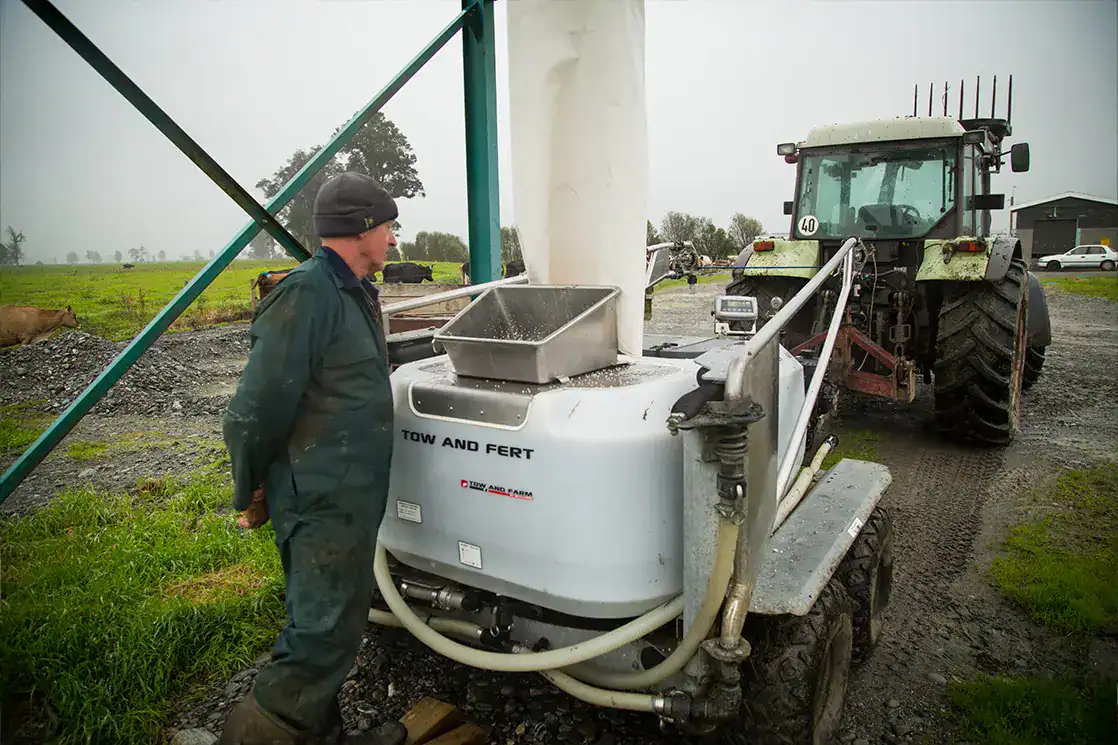
Ian mixes and applies dissolved urea with the Tow and Fert, timing applications to fine days.
This story was filmed in 2018 and reflects one farmer’s own experience with their Tow and Fert. Every farm is different, so please treat it as a story rather than a forecast for your place.
Less Nitrogen, on His Own Terms.
For West Coast dairy farmer Ian Maxwell, changing how nitrogen is applied has changed how he farms.
Before the Tow and Fert, Ian used conventional dry urea.
“Before we got the Tow and Fert, we were just using normal dry urea in spreadable form.”
Farming in an area that gets more than 4.2 metres of rain a year, Ian noticed heavy nitrogen applications didn’t always translate into pasture his herd could use well.
“That, coupled with nitrogen, just leaves you with a lot of soup in the grass, which cows don’t really digest that well.”
Ian now applies smaller amounts of dissolved nitrogen, more often.
“With the Tow and Fert machine, we’ve reduced that amount of water in the grass by putting less nitrogen on.”
“So this year we’ve saved around 36 tonnes of nitrogen by using the Tow and Fert. That has equated to a saving of about $18,000 in nitrogen.”
Thinking about Tow and Fert?
Talk with a specialist
Tell us about your operation and we’ll match the right model and setup for you.
“Once upon a time, environmental never really had a part to play in our farming practice. Now it has to be. It has to be environmentally friendly.”
Being able to time applications to conditions matters to Ian.
“Using the Tow and Fert means that you spray it on fine days when it’s not raining. Nothing runs to water. Nothing gets wasted.”
Standing in a paddock 30 days after applying just 18 units of nitrogen, Ian points to the result.
“This is 30 days. This is 18 units. This is what it equals. You can see the density in here. Good thick tucker.”
“Lovely grass. Lovely pats. Lovely grass equals healthy, wealthy cows.”
Every farm’s different, and Ian’s numbers are his own. Individual results will vary depending on rainfall, soil, stocking rate and farm practice.
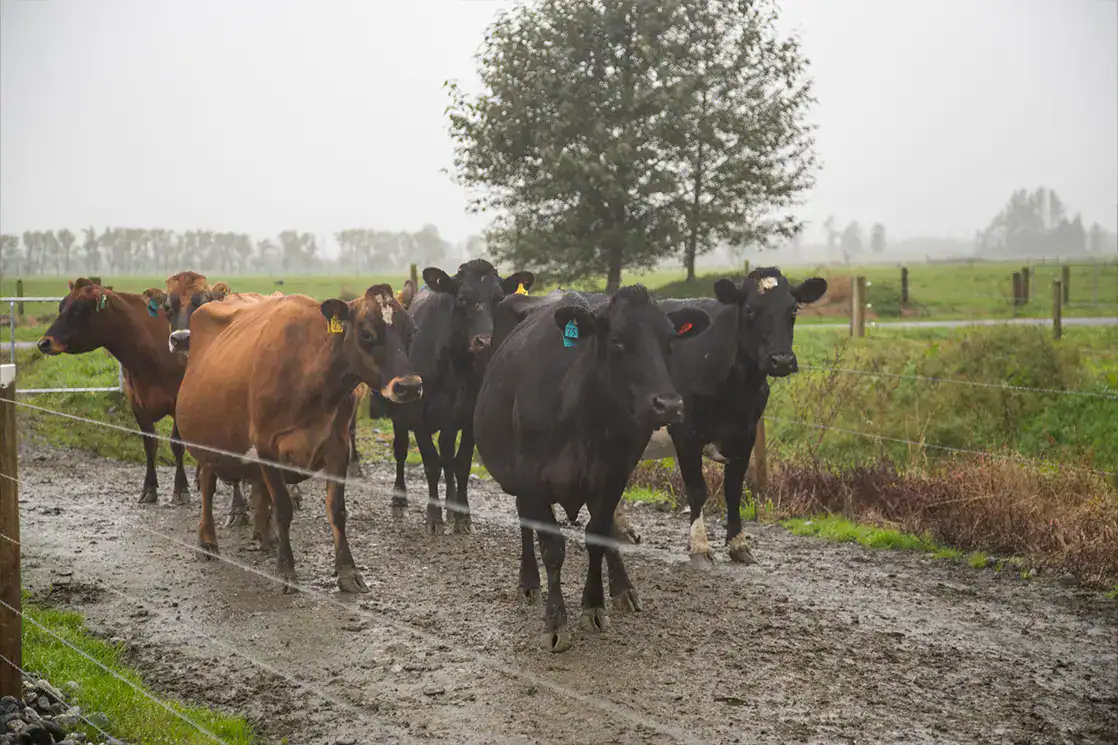
High rainfall – over 4.2 metres a year – is part of daily life on Ian’s West Coast farm.

