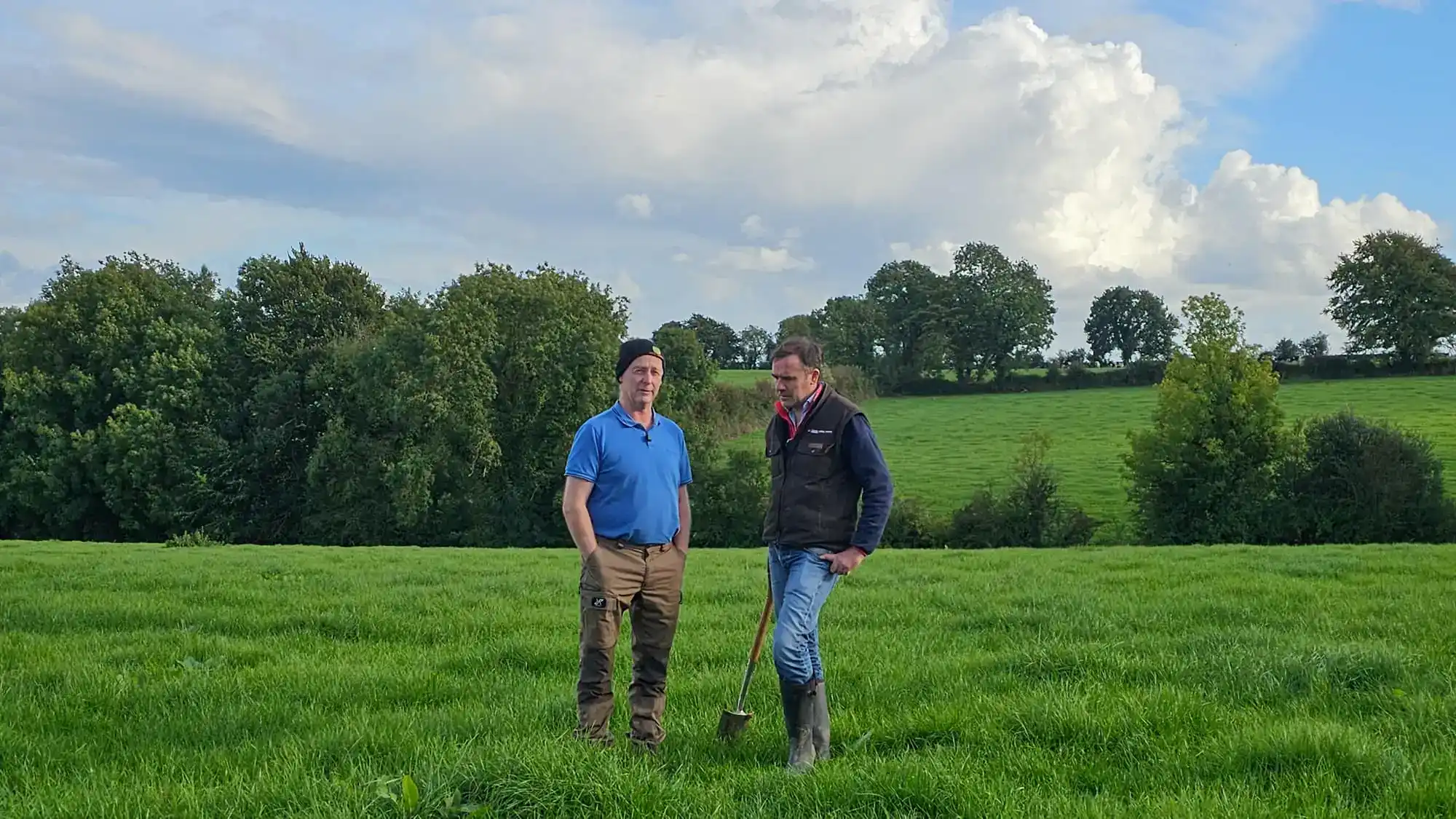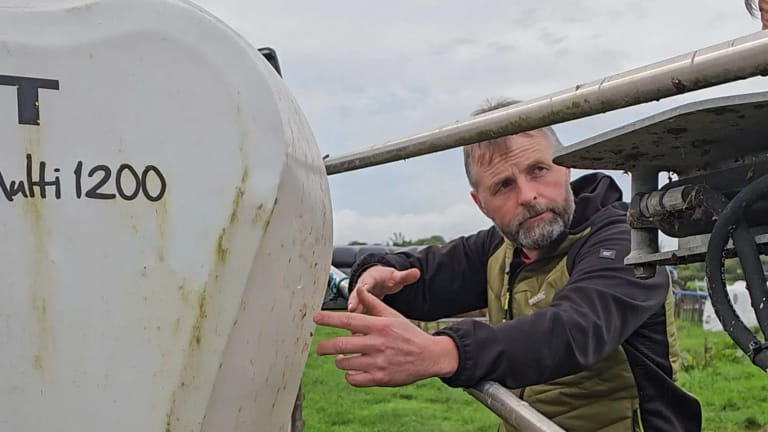
Ben and Denise
Bawnmore, Ireland
This story was filmed in 2025 and reflects one farmer’s own experience with their Tow and Fert. Every farm is different, so please treat it as a story rather than a forecast for your place.
Backing liquid to beat the weather
You’re waiting for a shower of rain to come to melt a granule of granular fertiliser. So I felt that by using liquid you’ve got a serious head start. You’re always going to get more benefit out of it even in a dry summer, because if you get any shower of rain, you’ve already got your nitrogen out and it’s in liquid form. So once you get any bit of moisture, it’s gonna grow grass for you.
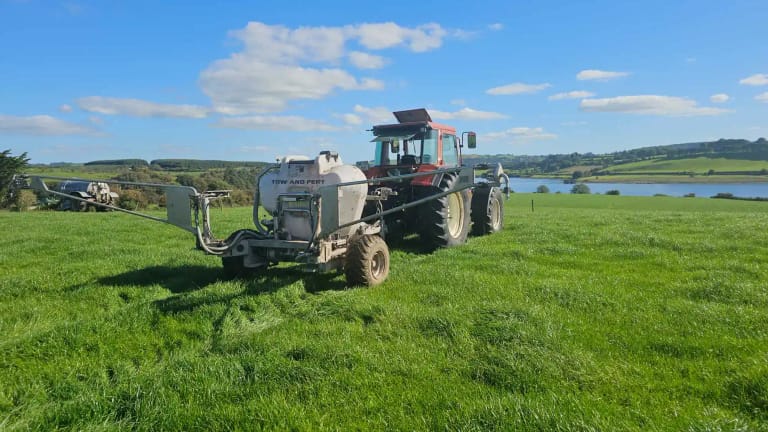
Ben and Denise have farmed at Bawncross Farm in Bawnmore since the mid-1980s, and tried plenty of approaches along the way. It was a few Tow and Fert videos on YouTube that first caught Ben’s attention. A bit of research from there convinced him liquid nitrogen had to be more efficient than waiting on a granule to dissolve.
They now spread all their own fertiliser, rather than relying on contractors to get granular out early in spring.
The stress has gone from it, the trying to get out first thing in the early part of the spring to put out the granular, that’s kind of gone. We haven’t gone out before the 10th of March now with nitrogen, and I think when we are putting it out, we’re getting a better response. The response is nearly immediate.
Four seasons in, Ben and Denise say they’re very happy they made the switch.
Thinking about Tow and Fert?
Talk with a specialist
Tell us about your operation and we’ll match the right model and setup for you.
When we ordered it, we were working out on a three-year return just on the savings of the fertiliser alone. That ended up being blasted out of the water and doing it in 12 months.
We were using probably about 220 kilos of nitrogen per hectare in granular form for a number of years. So since we went to liquid, we’re probably down to half of that. One year we were on about 100 kilos per hectare. This season we probably did about 120 to 130. I think we’re growing more grass. Easier to grow grass anyway.
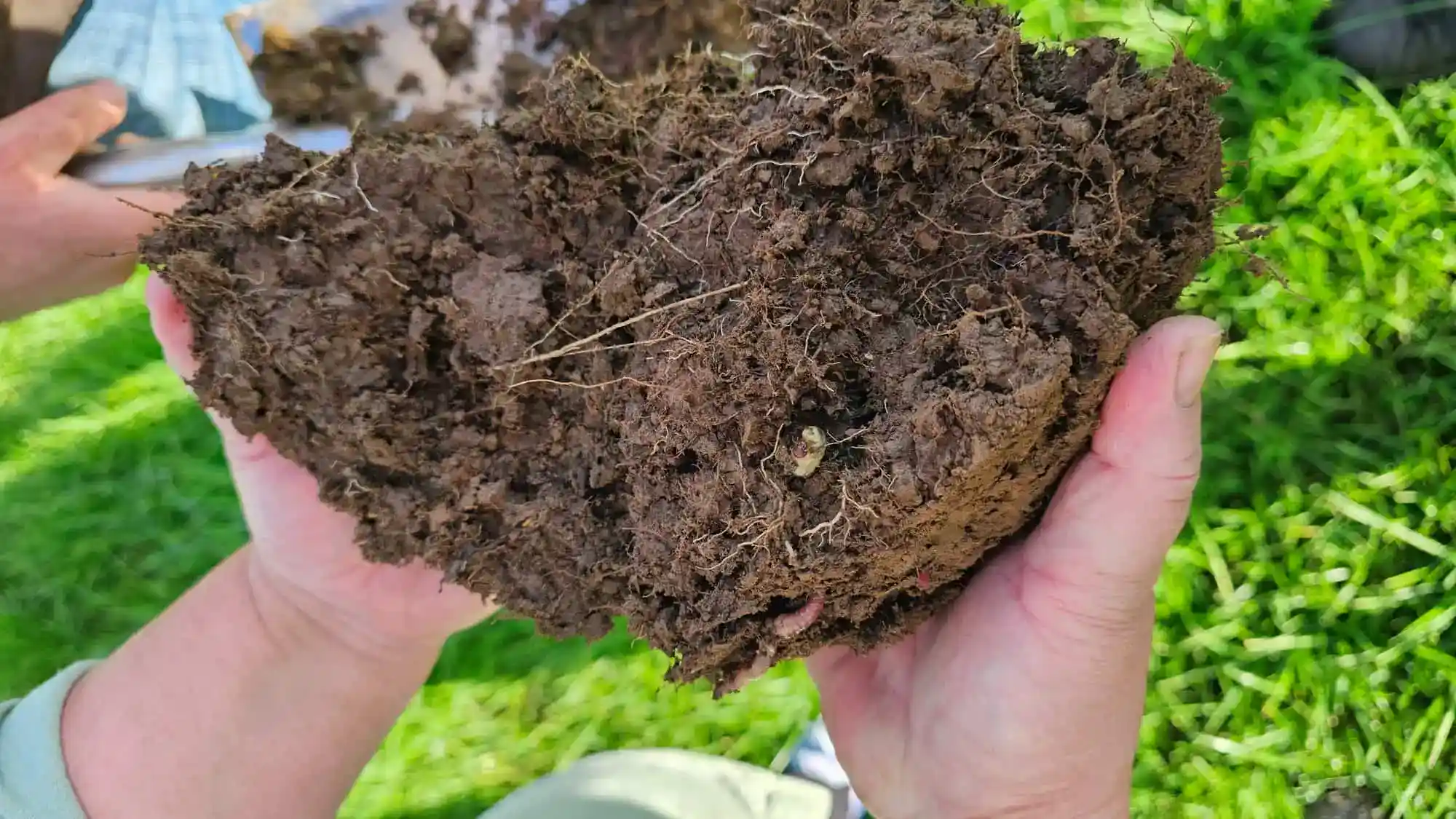
Alongside liquid nitrogen, Ben puts molasses and humates through the machine with each load, and has been experimenting further, making his own fish hydrolysate, lacto bacillus, and plant juices drawing on Korean natural farming methods.
These results reflect Ben and Denise’s whole approach on their farm, including molasses, humates, and other inputs made and applied through the same system, not the machine or liquid nitrogen alone.
I can’t actually put my hand up and say that it was the liquid nitrogen responsible, but something’s helped anyway.
Looking back, Ben and Denise see Tow and Fert as more than a way to cut fertiliser costs. It’s given them the flexibility and control to keep building their own system, on their own timing.